CoinShares: The digital asset treasury's "bubble has basically burst", and the next generation of DAT cannot issue debts and hoard coins without thinking.
James Butterfill, director of research at digital asset management company CoinShares, said that the speculative bubble in Digital Asset Treasuries (DAT) has indeed burst on many levels.
(Preliminary briefing: Texas in the United States spent $5 million to buy BlackRock IBIT: After DAT stalled, can SBR take over and reignite the Bitcoin bull market?)
(Background supplement: Wall Street boycotts DAT? MSCI considers micro-strategy and other "crypto reserve companies" to be excluded from index components)
Contents of this article
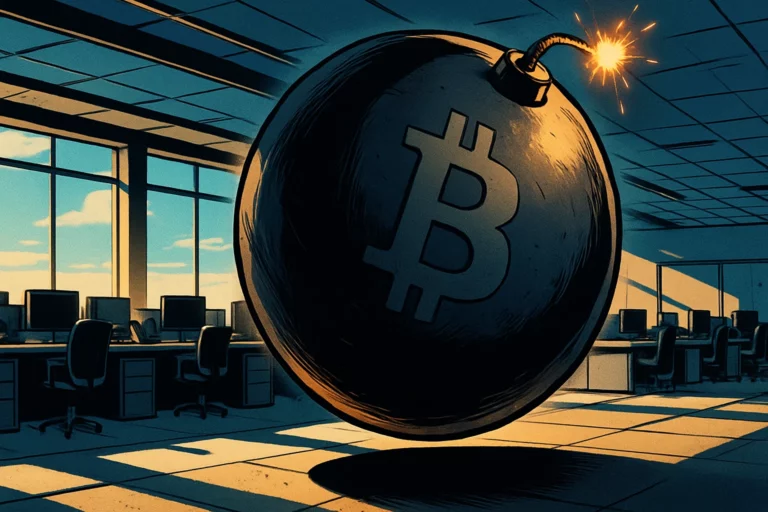
James Butterfill, research director of digital asset management company CoinShares, at A long blog post was published on December 5, stating bluntly: The speculative bubble of Digital Asset Treasuries (DAT), which are listed companies that specialize in hoarding crypto assets such as Bitcoin and Ethereum on their balance sheets and allowing investors to indirectly hold cryptocurrencies by buying stocks, "has indeed burst from many levels."
From star concept to bubble disillusionment: the mania of the summer of 2025 is over
Butterfill's review pointed out that in the summer of 2025, the market value of many DAT companies once soared to 3 times, 5 times or even 10 times the net asset value (mNAV), and the market pursued them as "leveraged Bitcoin ETFs". Now, the mNAV of these companies has almost all fallen back to 1x or even lower, and the premium has completely disappeared. He emphasized that this is not a simple price retracement, but the market's collective awakening to the model of "crazy hoarding of currency by issuing stocks without any actual operating business."
Butterfill continued to point out that the original design of DAT was to use Bitcoin to hedge the risk of currency depreciation. The Bitcoin reserve strategy launched by Strategy (MSTR) in August 2020 is a classic case. However, later on, many companies did not engage in their own business at all. The only purpose of issuing stocks was to buy more coins, and even used debt, preferred stocks, and ATM mechanisms to keep adding more money. It turned into a "leverage bet on the price of Bitcoin forever rising" bet, which completely deviated from the original intention.
The biggest fear now is not that the price of the currency will fall again, but that it will be "forced to sell the currency."
The article further analyzed that almost none of the major DAT companies have sold currencies on a large scale this year because they are still trying their best to avoid triggering a selling spiral. But once mNAV is lower than 1x for a long time, three outcomes may occur:
- Management is unwilling to reduce the scale of reserves and chooses to hold on and wait for a rebound
- A few companies do the opposite, sell currency to buy back shares, and increase the number of coins held per share
- Become a target of mergers and acquisitions, and be bought into Bitcoin at a low price by companies with more abundant funds
However, Butterfill believes that the first scenario is most likely to occur, especially in the With the U.S. Federal Reserve likely to continue cutting interest rates in December and the macro environment improving, the crypto market is still expected to rebound.
The next generation of DAT will be reshuffled: four new categories are about to emerge
Butterfill also predicts that investors will reclassify the market into four categories in the future, including:
- Speculative DAT: The industry is dispensable, purely relying on currency holdings to bet on prices
- Treasury-driven type DAT: Really use Bitcoin as a foreign exchange management tool
- Token investment companies: like closed-end funds that hold diversified tokens
- Strategic companies: companies such as Tesla and Block Inc. that hold currencies but do not have DAT signs
Butterfill joked: "Really high-quality companies are excluded from DAT Beyond the label, this is the biggest irony. ”
Conclusion: The bubble bursts, but the concept will not die
Butterfill finally emphasized that the bursting of the DAT bubble does not mean that the concept is dead, but that it is returning to the right track. Future winners must meet three conditions: real operating businesses, disciplined asset management, and realistic expectations. Otherwise, the method of "using the stock market as an ATM machine to keep buying coins" will be completely eliminated by the market.